There are times when it makes sense to fix things around the house yourself. However, if the problem involves your AC, it’s usually best to call a professional for AC Repair Round Rock.
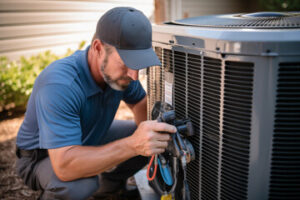
Foul odors coming from the vent could indicate that you have mold or mildew in your duct system. Insufficient cooling could be a sign of low refrigerant or a clogged evaporator coil.
Your air filter is the AC unit’s first line of defense against contaminants, debris, dust, and pollutants. When properly maintained, your air filter can significantly boost indoor air quality and help extend the lifespan of your system. However, when your filter becomes too clogged with dust, dander, pollen, germs, and other debris, it will no longer provide adequate filtration. This can cause serious problems and lead to costly air conditioning repair.
The primary problem associated with a dirty air filter is that it prevents proper airflow through the system. A clogged filter will restrict the flow of cool air, forcing the system to work harder to push the same amount of air through. This extra strain is a major source of energy loss, which can significantly increase your monthly utility bills.
A clogged air filter can also reduce the efficiency of your HVAC system, meaning it will produce less cool air per cycle. Additionally, the increased strain on the unit can lead to accelerated wear and tear, which will shorten its lifespan. In the worst-case scenario, a clogged filter can completely breakdown your air conditioner, requiring professional AC repair and potentially thousands of dollars for a replacement.
Luckily, changing or replacing your air filter is one of the easiest ways to avoid clogged filters. We recommend that you do so at least once every three to four months, depending on your household. If you’re having a difficult time remembering to change your filter, we recommend purchasing a smart device that can remind you when it’s time to replace it. Alternatively, you can opt for our preventative maintenance plan that will ensure your air filter stays clean and your system stays healthy!
Thermostat Issues
Your thermostat is the brains behind your home’s HVAC system, telling the AC and heater what to do and when. If the thermostat is not functioning properly, it can put a strain on your system and lead to inefficient cooling. This may be caused by a number of issues, including dead batteries, faulty wiring, or the thermostat reaching the end of its life. A professional can troubleshoot your system and make the necessary repairs.
The first thing to check is the power supply to the thermostat. If it is battery-operated, replace the batteries. If it is hardwired, you can inspect the wiring for loose or damaged connections. In addition, you can also try resetting the thermostat by turning it off and back on again. For some systems, this will reset the software and resolve minor glitches. Refer to the user manual for specific instructions.
Another common issue is short-cycling, which occurs when the thermostat sends improper signals to the HVAC system. This can cause the system to turn on and off repeatedly, wasting energy and potentially leading to damage.
In some cases, the thermostat can be overloaded with programmable settings. These can include incorrect temperatures, running the wrong cycle, or having a set schedule that isn’t working. Having these settings corrected by a professional can save you money and keep your system running smoothly.
Over time, your thermostat can become contaminated with dust and dirt. This can block sensors and prevent them from functioning correctly. You can clean your thermostat by removing it from the wall and using a soft cloth to wipe down the interior. You can also use a duster to remove any debris from the vents. In most cases, these quick checks will help you spot basic problems. However, more complex issues, such as erratic readings or random cycling, require a professional to diagnose and repair. Working around electrical components can be dangerous, so you should only attempt these steps if you are comfortable and familiar with your thermostat. An expert will be able to safely test the internal circuitry and switches.
Refrigerant Leaks
Refrigerant is the chemical that cycles through your air conditioning system, absorbing and releasing heat to effectively cool your home. When a leak develops in the system, your AC loses its ability to remove moisture from the air in your home and you’ll notice that your AC is not cooling as efficiently.
If you suspect your AC unit is low on refrigerant, there are several clues to watch out for. If you’re noticing weak or warm airflow coming out of your vents, check the evaporator coil to see if it is covered with ice. You should also hear quiet hissing or bubbling sounds as the system runs – these are common signs of a refrigerant leak.
Leaving a leak untreated can lead to a number of serious issues. First, the refrigerant will slowly escape the system, creating an insufficient level of cool air. This can cause your AC to work overtime to try and cool your home, leading to a significant spike in your power bill. It can also damage the compressor, a costly and difficult-to-replace component of your AC.
Like any mechanical system, your air conditioner will wear down over time and components will eventually wear out or break down. The constant stress of heating and cooling cycles can cause flaking and cracking, particularly in rubber seals around service valves that are used to check refrigerant levels. Also, over time, metal parts will wear out, becoming brittle and breaking under the pressure of thermal expansion and contraction.
A refrigerant leak isn’t inevitable, but it can occur at any point in the lifespan of your AC unit. Regular inspections can help prevent leaks by catching them in their early stages. However, physical damage can cause a leak if something hits the outdoor unit or the lines running between it and the indoor unit. This could include falling tree branches, lawn equipment striking the lines or shifting foundations putting pressure on them.
Leaks can also develop due to installation errors or manufacturing defects. For example, improper brazing or incomplete flare connections can create weak points that will gradually release refrigerant. Also, a defective part may simply slip past factory testing and become a problem later on.
Electrical Issues
Electrical issues, including faulty wiring and capacitors, can contribute to AC repairs. These components help power the fan and compressor motor, so when they go bad, your AC may struggle to start at all or fail to cool properly. Electrical issues can also lead to frequent circuit breaker trips and blown fuses, which puts the system at risk of damage. Often, a few simple troubleshooting steps can identify the source of these problems before they become serious.
Electrical problems in your cooling system may appear as unusual noises, a sudden loss of power, or inconsistent air flow. Keeping an eye out for these issues can save your system from more serious problems when Mission temperatures begin to climb.
Inspecting your air filter and resetting the circuit breaker are common first steps to take when troubleshooting AC electrical issues. You should also check the breaker panel for overheating and signs of other problems, such as loose or corroded wire connections.
If you’re uncomfortable working on these high-voltage components, call in a licensed professional to perform the inspection and repair. Trying to do it yourself could put you at risk of electric shock or fire.
Faulty electrical wiring often leads to AC malfunctions, particularly in older homes. These problems can be caused by loose or faulty wires, improper outlet usage, or overloading of the circuit. Regular maintenance and inspections can reduce the likelihood of electrical problems, especially if homeowners manage electrical loads and ensure that all wiring meets safety standards.