Signs That Your Gutter System Needs Repair

A gutter system is designed to direct roof precipitation safely away from the home. When gutters don’t function properly, homeowners experience a wide variety of complications that often involve thousands in repairs.

Gutter

Regular gutter cleaning can help prevent problems such as overflow, clogging, and leaks. However, some repair work requires professional intervention.

If you notice water puddles, staining or rusting along your gutters and downspouts, or sections of the gutter that are missing, this is a sign that your gutter system needs repair. Damaged gutters are a serious problem and can cause significant water and structural damage to your home over time. If you notice these problems, it is important to repair them as soon as possible.

Gutter systems are typically held in place by sleeve-and-spike supports or fascia brackets nailed to the face of the house and strap hangers nailed to the roof. They may also be fastened with aluminum gutter fasteners or screws. If these fasteners corrode, the gutters will be loose and may fall off. Loose gutters should be repaired as soon as possible, and the fasteners should be replaced.

Gutters are designed to direct rainwater away from your foundation, avoiding soil erosion and basement flooding and protecting your home’s structure and stability. However, damaged gutters can clog or overflow, causing water to pool around the foundation, resulting in severe and costly structural damage. In addition to a damaged foundation, this moisture can lead to mildew growth and rot that can affect the safety of your home’s inhabitants.

Performing frequent visual inspections is the best way to catch gutter problems early. A sagging gutter or isolated section that is loose should be repaired immediately, as this can lead to more extensive and expensive problems in the future.

Leaking or cracking gutters are usually caused by wear and tear over time, and can be exacerbated by harsh weather conditions. A leaky gutter can cause water to seep into the fascia boards or wall of your home, leading to wood rot and structural damage. Gutter leaks are usually easy to spot, as they are often accompanied by a foul smell and visible stains.

In most cases, a leaking gutter can be repaired by using a gutter specific sealant, which is available from your local hardware store or roofing professional. The sealant should be applied to a clean, dry gutter to ensure the sealant adheres properly and creates a strong waterproof barrier. When repairing gutters, it is critical to use stable ladders, and wear protective gear like gloves and safety goggles. It is also recommended to use a buddy system to assist with ladder stability and tools, and to wear non-slip shoes.

Sagging Gutters

Gutters are designed to protect our homes from water damage, but the gutters themselves can experience damage over time. This can lead to sagging gutters, which are not only unsightly but also pose the risk of pulling away from the fascia. Sagging gutters should be repaired as soon as possible to prevent further damage and potentially dangerous water leaks.

If you have sagging gutters, the first step is to determine where the problem area is located. Get up on a ladder and sight along the length of the gutter to check for any loose spikes or hangers that may be contributing to the sagging. The next step is to remove any loose spikes or hangers. If you have used spikes that don’t have threading, you will need to replace them with new ones that are threaded to ensure they stay securely attached to the gutter. You can buy these spikes at your local hardware store. For best results, use the threaded spikes that come with metal ferrules to keep them in place.

You can also add wooden shims to the bottom of each gutter section to help with the sagging. These are available at your local hardware store and are easy to install. If you’re using wood shims, simply cut them to the appropriate length and then apply wood glue to the ends before inserting them into the gutter. You can also add epoxy to the shims to help them stay in place and reinforce the gutter system.

It’s important to keep in mind that the slope of your gutters can also contribute to sagging. Gutter systems should be set up so that they slope down about 1/4 inch for every 10 feet of gutter. This will ensure that water runs down and away from the house instead of pooling in the gutters.

While sagging gutters are often caused by the weight of debris that accumulates inside them, it can also be a sign of poor installation. If the gutters have been improperly fastened to the fascia board, they can pull away from the roof or even rip off completely. To avoid this, have a professional roofer inspect your gutters and make any necessary repairs.

Overflowing Gutters

Seeing water overflowing from your gutters is a sign that they aren’t doing their job. Gutters are designed to channel rainwater away from your roof, walls, and foundation. If they aren’t doing that, your home can be exposed to severe damage, including eroding landscaping, basement flooding, and foundation problems. This is why keeping your gutters in tip-top shape is so important!

Overflowing gutters are often caused by clogged gutters or an incorrect gutter pitch. Even when you’re cleaning your gutters, it can be hard to spot the underlying problem. That’s because the issues that cause overflowing usually occur deep inside the gutter system, where clogs can form at corners or at downspout attachments. Compacted leaves, twigs, asphalt shingle granules, and other debris can get trapped in these places over time and force water to overflow your gutters, even when they look clean from the ground.

Another possible cause of overflowing gutters is downspouts that are too small to contain the volume of rainwater during heavy rains. Adding more downspouts, installing downspout extensions, and relocating existing ones can help solve this problem.

When the water in your gutters can’t be directed away from your home, it can seep into the ground around your foundation and cause damage to your siding, driveway, sidewalks, and other outdoor surfaces. It can also damage the walls and foundation of your home, causing mold growth, wood rot, and other problems that require costly repairs.

Overflowing gutters can be difficult to fix without the help of a professional. That’s why it’s always best to invest in a gutter solution that prevents these issues before they start, like quality gutter guards, regular cleanings, quick inspections during yard work, and professional maintenance. It will save you money on repair bills in the long run and keep your gutters functioning efficiently year-round. For the best results, it’s essential to work with a trustworthy roofing company that can assess your gutters and roof for underlying issues and recommend effective solutions. Contact us to schedule a free gutter inspection today!

Clogged Gutters

Gutters play a critical role in protecting your home from water damage by directing rainwater into downspouts and away from the foundation, walls, and roof of your house. However, gutters can be clogged with leaves, twigs, and other debris that prevent rainwater from flowing properly. Clogged gutters can lead to water damage, mold, rot, and leaky basements, among other costly problems. Learning the key signs of a clogged gutter and taking preventative action can help you avoid costly repairs.

Standing water or muddy spots around the home are signs that your gutters may be clogged. This is because clogged gutters allow water to spill over the sides of the trough, which can flood grass and soil near your foundation. This water can also erode dirt and saturate the ground right up against your home, causing cracks in the foundation and walls and leading to basement leaks.

If you suspect that your gutters are clogged, first try to flush the trough by removing any debris that may be lodged inside the clog. If that doesn’t work, you can try a plumbing snake or power washer. With a pair of gloves and protective eyewear, insert the snake or power washer into the clogged gutter downspout, then rotate it to break up the clog and clear out the trough. Once the clog is removed, you can rinse out the downspout with a hose to remove any remaining debris.

If you’re unable to clear out the clog with any of these methods, it’s time to call in a professional. A gutter specialist can use a ladder with a secure footing and follow proper ladder safety techniques to reach the clogged gutter safely. They can then use a ladder extension, a power washer, or a plumbing snake to get to the bottom of the clogged downspout and break up the clog from inside out. They can also remove the clogged grating and check for any other issues with your gutter system. Then, they can install new seamless gutters to help your home avoid future clogs and leaky basements.
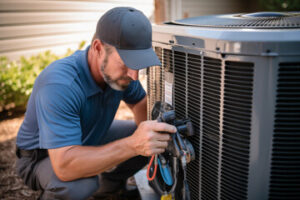

Why You Should Leave AC Repair to the Pros

There are times when it makes sense to fix things around the house yourself. However, if the problem involves your AC, it’s usually best to call a professional for AC Repair Round Rock.

AC Repair

Foul odors coming from the vent could indicate that you have mold or mildew in your duct system. Insufficient cooling could be a sign of low refrigerant or a clogged evaporator coil.

Your air filter is the AC unit’s first line of defense against contaminants, debris, dust, and pollutants. When properly maintained, your air filter can significantly boost indoor air quality and help extend the lifespan of your system. However, when your filter becomes too clogged with dust, dander, pollen, germs, and other debris, it will no longer provide adequate filtration. This can cause serious problems and lead to costly air conditioning repair.

The primary problem associated with a dirty air filter is that it prevents proper airflow through the system. A clogged filter will restrict the flow of cool air, forcing the system to work harder to push the same amount of air through. This extra strain is a major source of energy loss, which can significantly increase your monthly utility bills.

A clogged air filter can also reduce the efficiency of your HVAC system, meaning it will produce less cool air per cycle. Additionally, the increased strain on the unit can lead to accelerated wear and tear, which will shorten its lifespan. In the worst-case scenario, a clogged filter can completely breakdown your air conditioner, requiring professional AC repair and potentially thousands of dollars for a replacement.

Luckily, changing or replacing your air filter is one of the easiest ways to avoid clogged filters. We recommend that you do so at least once every three to four months, depending on your household. If you’re having a difficult time remembering to change your filter, we recommend purchasing a smart device that can remind you when it’s time to replace it. Alternatively, you can opt for our preventative maintenance plan that will ensure your air filter stays clean and your system stays healthy!

Thermostat Issues

Your thermostat is the brains behind your home’s HVAC system, telling the AC and heater what to do and when. If the thermostat is not functioning properly, it can put a strain on your system and lead to inefficient cooling. This may be caused by a number of issues, including dead batteries, faulty wiring, or the thermostat reaching the end of its life. A professional can troubleshoot your system and make the necessary repairs.

The first thing to check is the power supply to the thermostat. If it is battery-operated, replace the batteries. If it is hardwired, you can inspect the wiring for loose or damaged connections. In addition, you can also try resetting the thermostat by turning it off and back on again. For some systems, this will reset the software and resolve minor glitches. Refer to the user manual for specific instructions.

Another common issue is short-cycling, which occurs when the thermostat sends improper signals to the HVAC system. This can cause the system to turn on and off repeatedly, wasting energy and potentially leading to damage.

In some cases, the thermostat can be overloaded with programmable settings. These can include incorrect temperatures, running the wrong cycle, or having a set schedule that isn’t working. Having these settings corrected by a professional can save you money and keep your system running smoothly.

Over time, your thermostat can become contaminated with dust and dirt. This can block sensors and prevent them from functioning correctly. You can clean your thermostat by removing it from the wall and using a soft cloth to wipe down the interior. You can also use a duster to remove any debris from the vents. In most cases, these quick checks will help you spot basic problems. However, more complex issues, such as erratic readings or random cycling, require a professional to diagnose and repair. Working around electrical components can be dangerous, so you should only attempt these steps if you are comfortable and familiar with your thermostat. An expert will be able to safely test the internal circuitry and switches.

Refrigerant Leaks

Refrigerant is the chemical that cycles through your air conditioning system, absorbing and releasing heat to effectively cool your home. When a leak develops in the system, your AC loses its ability to remove moisture from the air in your home and you’ll notice that your AC is not cooling as efficiently.

If you suspect your AC unit is low on refrigerant, there are several clues to watch out for. If you’re noticing weak or warm airflow coming out of your vents, check the evaporator coil to see if it is covered with ice. You should also hear quiet hissing or bubbling sounds as the system runs – these are common signs of a refrigerant leak.

Leaving a leak untreated can lead to a number of serious issues. First, the refrigerant will slowly escape the system, creating an insufficient level of cool air. This can cause your AC to work overtime to try and cool your home, leading to a significant spike in your power bill. It can also damage the compressor, a costly and difficult-to-replace component of your AC.

Like any mechanical system, your air conditioner will wear down over time and components will eventually wear out or break down. The constant stress of heating and cooling cycles can cause flaking and cracking, particularly in rubber seals around service valves that are used to check refrigerant levels. Also, over time, metal parts will wear out, becoming brittle and breaking under the pressure of thermal expansion and contraction.

A refrigerant leak isn’t inevitable, but it can occur at any point in the lifespan of your AC unit. Regular inspections can help prevent leaks by catching them in their early stages. However, physical damage can cause a leak if something hits the outdoor unit or the lines running between it and the indoor unit. This could include falling tree branches, lawn equipment striking the lines or shifting foundations putting pressure on them.

Leaks can also develop due to installation errors or manufacturing defects. For example, improper brazing or incomplete flare connections can create weak points that will gradually release refrigerant. Also, a defective part may simply slip past factory testing and become a problem later on.

Electrical Issues

Electrical issues, including faulty wiring and capacitors, can contribute to AC repairs. These components help power the fan and compressor motor, so when they go bad, your AC may struggle to start at all or fail to cool properly. Electrical issues can also lead to frequent circuit breaker trips and blown fuses, which puts the system at risk of damage. Often, a few simple troubleshooting steps can identify the source of these problems before they become serious.

Electrical problems in your cooling system may appear as unusual noises, a sudden loss of power, or inconsistent air flow. Keeping an eye out for these issues can save your system from more serious problems when Mission temperatures begin to climb.

Inspecting your air filter and resetting the circuit breaker are common first steps to take when troubleshooting AC electrical issues. You should also check the breaker panel for overheating and signs of other problems, such as loose or corroded wire connections.

If you’re uncomfortable working on these high-voltage components, call in a licensed professional to perform the inspection and repair. Trying to do it yourself could put you at risk of electric shock or fire.

Faulty electrical wiring often leads to AC malfunctions, particularly in older homes. These problems can be caused by loose or faulty wires, improper outlet usage, or overloading of the circuit. Regular maintenance and inspections can reduce the likelihood of electrical problems, especially if homeowners manage electrical loads and ensure that all wiring meets safety standards.

Understanding the Basics of PPC Management

PPC Management requires a significant time commitment and a dedicated budget. However, there are many tools that can help streamline the process. For example, Ahrefs and Optmyzr offer PPC analysis and optimization tools that can save you time and money.

ppc management

With expert PPC management, you can maximize ROI and gain a competitive advantage in a highly competitive digital landscape. Orlando PPC Management will optimize bids and adjust them based on performance data.

PPC Management is the process of overseeing pay-per-click (PPC) ad campaigns to maximize return on investment (ROI). Ad scheduling and dayparting are important aspects of this strategy because they determine how often your ads are shown throughout the day. This can significantly impact your ad visibility and performance.

To optimize your ad schedule, you should analyze the behavior of your audience and identify when they are most likely to convert. This data can be obtained from a variety of sources, including your website and social media. You can also use third-party data providers to identify trends and patterns in your audience’s activity.

Ad scheduling helps you allocate your budget more effectively by determining which hours of the day are best for your products and services. This can help you minimize your costs while maximizing conversions. It’s also a great way to test different strategies and optimize your campaign to improve ROI.

PPC management is the process of overseeing and optimizing ad campaigns to drive relevant traffic to your website. This can be a challenging task, as it requires an extensive knowledge of multiple advertising platforms and strategies.

Ad rotation

Ad rotation is the process of rotating different ads within a single ad placement to test performance, increase variety, or maximize reach. It also helps reduce ad fatigue, which can negatively impact CTR. Ad rotation is an important tool in PPC management and can help businesses achieve their business goals.

When selecting ad rotation, be sure to consider your campaign goals. For example, if you want to measure performance by clicks and conversions, opting for the Optimize for Clicks option will ensure that all ads receive equal exposure. However, this may limit the number of calls you receive (for example, if one ad is designed to lure customers into calling and another is designed to encourage them to request an online estimate).

In contrast, choosing the Optimize for Conversions option will prioritize ads that have been proven to perform well, maximizing conversions and ROI. This method is particularly effective for campaigns that focus on lead generation and sales. In addition, it can be used to manage your budget more effectively. It is a good idea to periodically review your ad rotation settings and make adjustments based on your results. Also, be sure to keep your brand message consistent across all ad variations to avoid ad fatigue.

Frequency capping

When users click on your PPC ad, they hope that it leads to a relevant landing page that fulfills their search intent. This is possible only when the entire PPC management strategy is optimized. It also ensures that the user gets a good experience and satisfaction from the whole process.

Frequency capping is an important tool that allows marketers to control the number of messages a person receives from one business in a short period of time. It helps prevent message fatigue, which can lead to unsubscribes and reduces engagement.

Using a PPC Management strategy that utilizes frequency capping can help businesses maximize their online visibility and drive traffic to their website. In addition, it can also help them increase conversions and improve their revenue-per-mille (RPM).

To create a frequency cap, navigate to the main capping plans area in Moments. Select the plan you want to edit and then edit its settings. Note that only commercial messages are counted toward the limit. When a user reaches the max number of messages for a specific channel, the system removes the capped journey from their send queue and prioritizes another high priority flow. This helps to prevent oversaturation of the audience and avoids sending messages that are viewed as spam.

Ad copywriting

PPC is a complex and dynamic marketing tool, and it requires expert management to get the best results. PPC is typically managed by in-house marketing teams, digital marketing agencies, or freelance specialists. PPC managers are responsible for overseeing accounts across multiple ad networks and optimizing campaigns for the highest return on investment (ROI).

Ad copywriting is an important part of any PPC campaign, and it can make or break your advertising performance. It is vital to write compelling ad copy that entices customers to click, buy, or sign up. A well-written ad will answer the customer’s search query, highlight the benefits of your product or service, and include a strong call-to-action.

Demographic targeting is a powerful PPC strategy that helps you target the right people at the right time. You can choose to target users based on their age, location, interests, and more. This allows you to create ads that speak directly to your audience, which can result in a higher ROI and greater visibility for your business.

Managing your ad campaigns requires close attention to details and extensive data analysis. To keep track of your ad performance, you can use third-party tools like Ahrefs and Optmyzr, which provide detailed reporting and analytics features.

Ad creative

Ad creative is a key component of a successful PPC management strategy. It involves creating compelling ad copy and visuals that resonate with your audience. A good California PPC agency will take the time to research keywords that are relevant to your business and audience and craft ads that capture attention. They will also develop strong call-to-action (CTA) phrases to encourage users to click on the ad and visit your website.

The best way to improve your ad performance is through continuous testing and optimization. This process is called A/B testing and involves analyzing the performance of multiple versions of an ad to see which one performs best. It is important to test your ads on different devices and platforms, as each screen size and mobile device offers a unique user experience.

Another way to improve your ad performance is by using in-market audiences, which target people who are actively researching your products or services. Using this strategy can help you increase your conversion rate and decrease your cost per acquisition. In-market audiences can be created through your search engine account settings or by tracking the visits of website visitors. They are a great way to target potential customers who may have left your site without making a purchase or signing up.

Keyword research

Keyword research is a key part of the PPC process, determining what words and phrases people search for to find your content. It isn’t a one-time process, but an ongoing endeavor that should be done regularly to ensure your ads are performing as expected. It also allows you to adapt your strategy as search trends change.

There are many free keyword research tools available, including Google Keyword Planner and Ahrefs. These tools can help you identify keywords that have high search volume and low competition, as well as help you track and analyze competitor ads.

Using the right keywords can have a huge impact on your website traffic and conversions. Choosing the best keywords will help you attract more visitors who are looking for your products or services, and will keep them on your site longer. However, it is important to remember that the right keywords should be relevant to your content or business, rather than just high-volume words.

Aside from the keywords themselves, there are other factors that influence how your ad performs. This includes ad rank, which is the value given to your ad by the search engine. The higher your ad rank, the more likely your ad will appear in the top results of the search engine.

Ad remarketing

Remarketing ads are a great way to reach customers who have already shown interest in your products or services. This type of advertising is especially effective for e-commerce sites and can boost sales and conversions by reminding users of the items they’ve viewed on your website. This strategy also helps reduce costs by reducing the number of clicks on your ads.

PPC Management involves managing campaigns and analysing performance data to improve them. This data can be used to optimize bidding strategies, refine targeting and increase ROI. In addition, PPC Management can help businesses better understand their audience and buyer behaviour by collecting valuable data that can be analysed to identify trends and opportunities.

For example, a business can use the data to discover that more users are clicking on their ads on weekends. This can help them decide to boost bids on those days to drive more traffic and conversions. Another piece of the PPC puzzle is creating landing pages that encourage visitors to carry out your campaign’s call-to-action. This is a key component of good PPC Management that requires professional copywriters, designers and developers. This ensures that your ad will provide a great user experience and generate satisfaction.